
Quick Answer
If your website traffic has dropped after Google’s AI Update, you’re not alone. Google’s AI-powered search experience, AI Overviews, and AI Mode are changing how users interact with search results. Many websites are seeing fewer clicks because users now get answers directly within Google. However, traffic loss can also result from content quality issues, outdated SEO strategies, technical problems, or increased competition.
The good news?
Most traffic losses can be analyzed, understood, and recovered with the right SEO, AEO, and GEO strategy.
Has Your Website Traffic Suddenly Dropped?
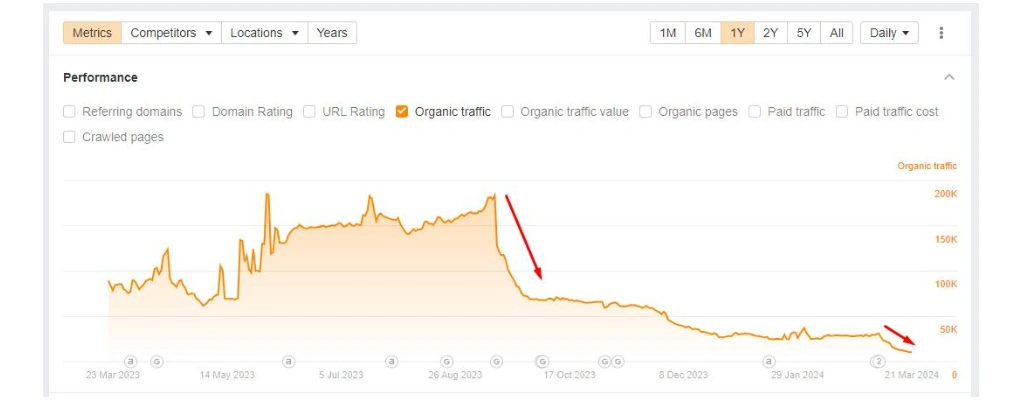
Imagine opening Google Analytics and noticing something alarming:
- Organic traffic is down.
- Rankings are fluctuating.
- Leads are decreasing.
- Click-through rates are falling.
For many businesses across India, this has become a common scenario following Google’s latest AI-driven search updates.
The reality is that search is changing faster than ever.
For years, SEO was largely about:
- Keywords
- Backlinks
- Technical optimization
- Ranking positions
Today, Google’s search ecosystem includes:
- AI Overviews
- Google AI Mode
- Conversational Search
- Generative AI Answers
- Multimodal Search
As a result, websites that once relied on traditional SEO alone are seeing significant traffic changes.
The important question is not:
“Why did traffic drop?”
Instead ask:
“What changed in search behavior?”
Understanding that answer is the first step toward recovery.
What Is Google’s AI Update?
Google’s AI Update refers to the integration of advanced AI experiences into search.
Instead of simply displaying a list of websites, Google increasingly provides:
- AI-generated summaries
- Direct answers
- Follow-up recommendations
- Conversational search experiences
Users can now receive information without clicking multiple websites.
This fundamentally changes how traffic flows across the internet.
In many cases:
Search visibility no longer guarantees website clicks.
Why Traffic Is Dropping for Many Websites
Not every traffic drop is caused by one factor.
Usually, multiple changes occur simultaneously.
Let’s examine the most common reasons.
1. AI Overviews Are Answering Questions Directly
One of the biggest reasons behind the traffic decline is Google’s AI-generated answers.
When users search:
- “What is local SEO?”
- “How does AI search work?”
- “What is content marketing?”
Google may provide a detailed AI-generated summary before showing traditional organic listings.
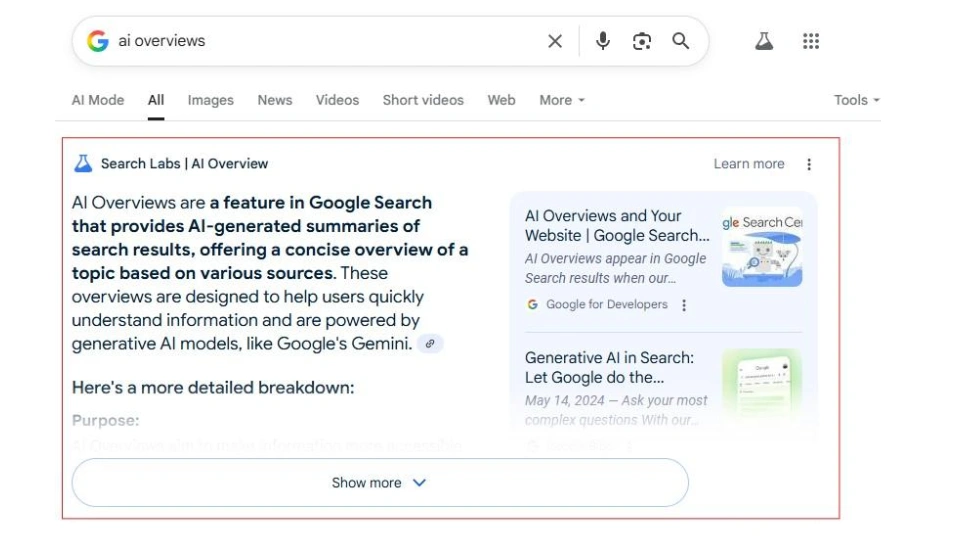
As a result:
Users often get their answer without clicking.
This phenomenon is known as:
Zero-Click Search
Websites targeting simple informational keywords are often affected the most.
2. Your Content Is No Longer Fresh
Google increasingly values:
- Updated information
- Recent insights
- Current statistics
- Active expertise
Many websites publish content once and never update it.
This creates content decay.
If competitors regularly refresh their content while yours remains outdated, rankings may gradually decline.
Fresh content matters more than ever in the AI Search Era.
3. AI Search Rewards Expertise More Aggressively
Google’s AI systems evaluate:
- Expertise
- Experience
- Authority
- Trustworthiness
This is often called:
EEAT
If your content lacks:
- Original insights
- Real-world expertise
- Unique analysis
Google may prioritize stronger sources.
Generic content is becoming increasingly vulnerable.
4. Search Intent Has Changed
A keyword that performed well two years ago may behave differently today.
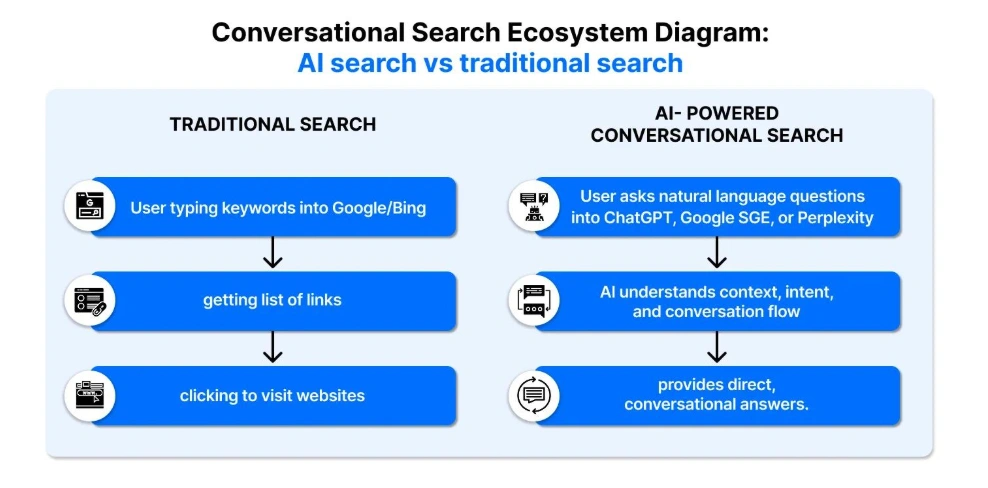
For example:
Previously:
Users searched and clicked.
Today:
Users ask questions conversationally and receive AI-generated responses.
The search journey has changed.
If your content is optimized for outdated search behavior, traffic may decline.
5. Competitors Are Adapting Faster
Many businesses still use traditional SEO strategies.
Others are already optimizing for:
- AI Overviews
- AEO (Answer Engine Optimization)
- GEO (Generative Engine Optimization)
- Conversational Search
These websites are positioning themselves for future search behavior.
As they gain visibility, older content loses ground.
6. Thin AI-Generated Content Is Losing Visibility
Many websites rushed to publish large amounts of AI-generated content.
Google has become increasingly effective at identifying:
- Low-value pages
- Repetitive content
- Generic information
- Thin articles
The issue is not AI itself.
The issue is:
Low-quality content.
Websites that publish helpful, original, and expert-driven content continue to perform well.
7. Technical SEO Problems
Not every traffic drop is related to AI.
Sometimes the issue is technical.
Common problems include:
- Broken pages
- Slow loading speeds
- Indexing errors
- Mobile usability issues
- Crawl problems
- Server downtime
Always check technical SEO before assuming an algorithm issue.
How Google’s AI Search Changes User Behavior
The biggest shift is behavioral.
Users increasingly prefer:
- Instant answers
- Conversational search
- Follow-up questions
- AI-generated recommendations
Instead of visiting five websites, users may now interact with AI summaries.
This means businesses must optimize not only for clicks but also for:
Visibility within AI-generated answers.
SEO vs AEO vs GEO: The New Search Landscape
Modern visibility requires three layers of optimization.
SEO
↓
AEO
↓
GEO
Traditional Search
↓
Answer Engines
↓
Generative AI Search
SEO (Search Engine Optimization)
Traditional ranking signals:
- Keywords
- Links
- Technical SEO
- Content relevance
AEO (Answer Engine Optimization)
Optimizing content for:
- Featured snippets
- Voice search
- AI answers
- Quick responses
GEO (Generative Engine Optimization)
Optimizing content for:
- AI Overviews
- Google AI Mode
- Generative search systems
- AI citations
Businesses that focus only on SEO may miss growing visibility opportunities.
Signs Your Traffic Drop Is AI-Related
You may be experiencing AI-related traffic loss if:
- Rankings remain stable, but clicks decline
- Impressions increase while traffic decreases
- Informational pages lose traffic
- AI Overviews appear for target keywords
These patterns indicate changing user behavior rather than ranking loss.
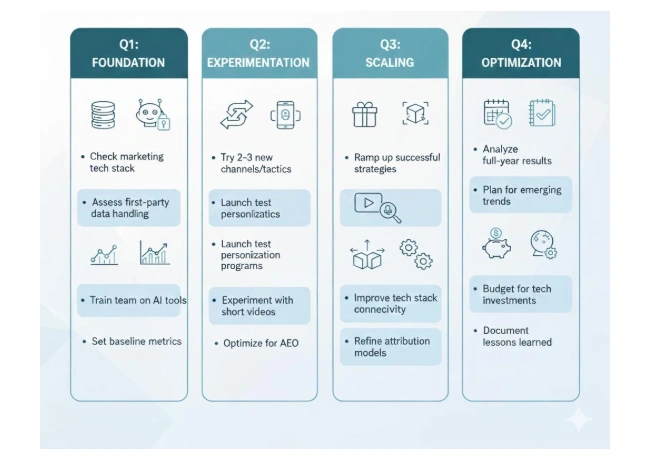
How to Recover Lost Website Traffic
The solution is not panic.
The solution is adaptation.
Audit Content
↓
Update Existing Pages
↓
Improve EEAT
↓
Optimize for AI Search
↓
Build Authority
↓
Track Results
Step 1: Audit Your Content
Review:
- Traffic trends
- Ranking changes
- Content quality
- Competitor performance
Identify pages losing visibility.
Step 2: Update Existing Content
Add:
- New insights
- Current examples
- Updated statistics
- Better explanations
Content freshness is becoming a major ranking factor.
Step 3: Optimize for AI Search
Include:
- Quick answer sections
- FAQ blocks
- Structured headings
- Conversational language
AI systems prefer easily digestible content.
Step 4: Strengthen Topical Authority
Instead of publishing random articles, create topic clusters.
Become a trusted source in your niche.
Authority improves AI visibility.
Step 5: Focus on EEAT
Demonstrate:
E = Experience
E = Expertise
A = Authoritativeness
T = Trustworthiness
Google increasingly rewards genuine expertise.
Step 6: Improve Technical SEO
Check:
- Core Web Vitals
- Mobile performance
- Crawlability
- Indexing
- Structured data
Technical health remains critical.
Why Brand Building Matters More Than Ever
In the AI Search Era, strong brands have an advantage.
Google increasingly trusts recognizable entities.
Brands with:
- Industry authority
- Strong reputation
- Consistent content
- Active engagement
often perform better.
This is why SEO and branding are becoming closely connected.
Businesses looking to recover traffic and adapt to AI-powered search can explore advanced SEO, AEO, and GEO strategies through Vivid DigiSolution.
Common Recovery Mistakes to Avoid
Publishing More Low-Quality Content
More content does not automatically mean more traffic.
Quality wins.
Ignoring AI Search
AI visibility is now part of SEO.
Chasing Every Algorithm Update
Focus on users, not rumors.
Relying Only on Keywords
Modern SEO requires intent, authority, and usefulness.
Avoiding Content Updates
Content maintenance is now essential.
The Future of Website Traffic
Website traffic is not disappearing.
It is evolving.
The winners in 2026 will be businesses that adapt to:
- AI Search
- Conversational Search
- Generative Search
- User-Centric Content
Search is becoming smarter.
Your content strategy must become smarter too.
Frequently Asked Questions (FAQs)
Why did my website traffic drop after Google’s AI Update?
Traffic may decline because AI Overviews provide answers directly in search results, reducing clicks to websites.
Can website traffic recover after a Google update?
Yes. Most websites can recover through content improvements, technical optimization, and AI search adaptation.
Does AI Search reduce organic traffic?
For some informational searches, yes. However, businesses can gain visibility through AI citations and stronger authority.
What is GEO in SEO?
GEO stands for Generative Engine Optimization, which focuses on improving visibility in AI-powered search experiences.
How can I optimize for Google’s AI Search?
Focus on helpful content, structured answers, topical authority, EEAT, and AI-friendly formatting.
Conclusion
If your website traffic has declined after Google’s AI Update, you’re experiencing one of the biggest transformations in search history.
The search ecosystem is shifting from:
- Keyword-focused rankings
to
- AI-powered answers
- Conversational discovery
- Generative search experiences
The businesses that succeed won’t be those who resist change.
They will be the ones who adapt.
By investing in:
- High-quality content
- Content freshness
- AI search optimization
- Technical SEO
- Topical authority
You can not only recover lost traffic but also position your website for long-term growth in the AI Search Era.
The future of SEO is no longer just about ranking.
It’s about becoming the source that AI and users trust.